Overview
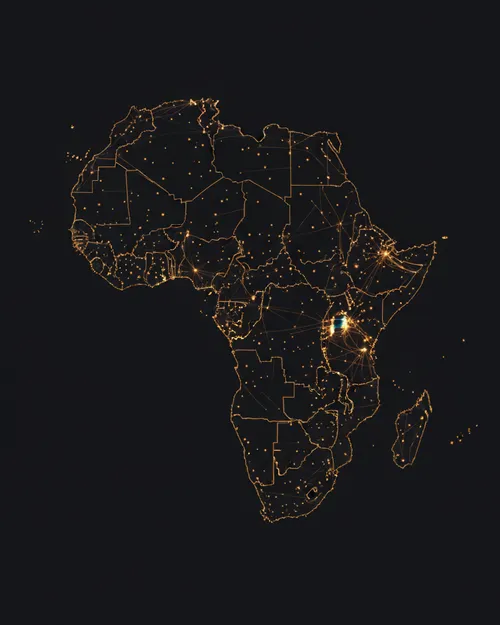
On September 2, President Donald Trump signed a stopgap spending bill that carries the African Growth and Opportunity Act (AGOA) to the end of 2028. That keeps the program alive. Yet AGOA accounted for only 0.7 percent of US trade in 2025, according to the Center for Global Development (CGD), and the extension does not make it a weapon against China, as Kenya, South Africa and the Democratic Republic of Congo (DRC) show.
Kenya: The Showcase That Is Hedging
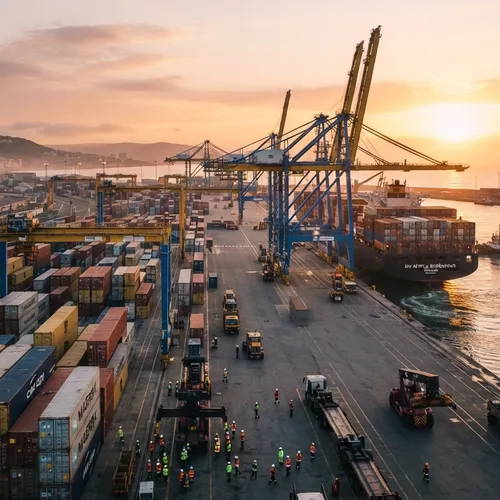
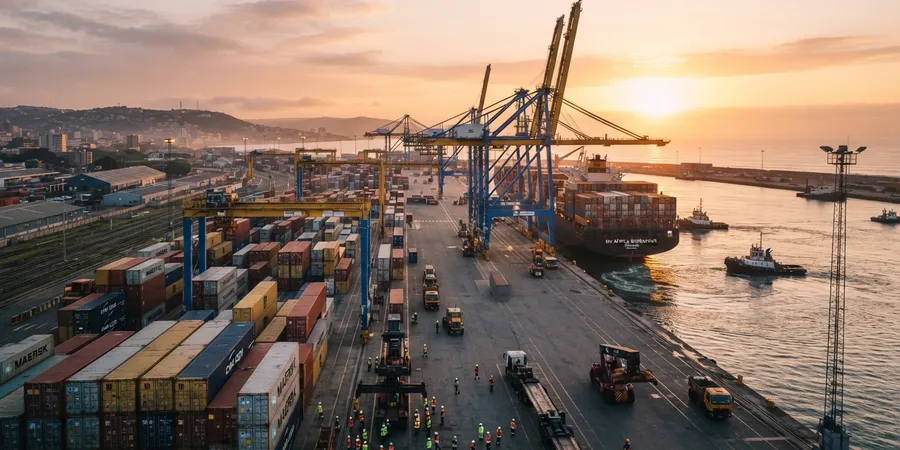
Kenya represents the pinnacle of what the African Growth and Opportunity Act can achieve. Christopher Kirigua, its deputy chief of mission in Washington, told Brookings that the textile industry employs more than 60,000 Kenyans, yet a $500 million plant needs about seven years to pay back, far longer than a two-year extension can promise. He puts the sector at $600 million in 2024, with room to reach $2 billion. Carnegie scholars Tyler Beckelman and Kholofelo Kugler add that UNCTAD warned a lapse would double average tariffs on apparel exporters such as Kenya to 20 percent or higher. Still, Nairobi is hedging. Kirigua also called a bilateral deal with Washington strategic, while China has offered nearly every African country duty-free access since May.
South Africa: AGOA as an Instrument of Pressure
Going on to the south of the continent, South Africa shows AGOA as an instrument of pressure. CGD reports that a 30 percent tariff, double or triple the rate for other AGOA countries, followed a political rift with Trump, alongside temporary exclusion from a US-hosted G20 round and a phase-out of $400 million a year in HIV treatment funding. The rate is now 12.5 percent under a forced-labor investigation. Pretoria has since signed a partnership framework with China, its largest trading partner. Annual eligibility reviews mean pressure can return.
The DRC: A Lever in the Critical Minerals Race
For Washington, maintaining the DRC’s AGOA eligibility serves as a critical strategic lever in the broader geopolitical race for critical mineral supply chains. CGD reports that refined copper escaped the 2025 tariffs and that Congolese copper exports jumped after a US minerals partnership that year. In February, Glencore (a Swiss-based multinational commodity trading and mining giant in the DRC) signed a non-binding memorandum on selling 40 percent of its Congolese copper and cobalt operations to a US-backed consortium. There is a fork in the road for mineral exporters: countries that strike bilateral deals may win preferential treatment, while others still face punitive tariffs. At a CSIS forum this month, Assistant Secretary of State for African Affairs Frank Garcia cited about 60 deals and $26 billion in revenue, and never mentioned AGOA. His pitch in Kenya, he said, centered on commercial opportunity and mining.
Conclusion
Defenders reply that AGOA was never designed to rival Beijing and that a smarter successor could still open African markets to American firms. That concedes the point. A tool not built for the contest cannot be its weapon. The extension is therefore a test, not a victory. AGOA preferences have not consistently come with financing, while annual reviews deter investors. Unless Washington fixes both, and accepts that African governments hold more partners and leverage than at any point since the Cold War ended, AGOA will remain a bargaining chip, not a strategy.